
Healthy soil is Nature’s capital
The foundation of productive and resilient farms. Our approach helps farmers restore this natural capital by turning organic wastes into soil boosters that reduce production costs, strengthen tree health, and create long-lived carbon sinks.
Understand Nature
Discover why healthy soils and biodiversity matter for farm and climate resilience.

Let Nature Work
Learn how natural processes can do the heavy lifting when soils are restored.

Reap the Rewards
Over time, farmers can do less, spend less, and benefit more as nature sustains productivity.

About WAGS BIO
WAGS BIO is a regenerative farming approach that helps to restore the living systems of soil, water, and biodiversity - this is the foundation for developing a profitable farm.
Farmers learn that by working with nature instead of against it, crops become more resilient, costs go down, and yields improve.
We make this shift simple and practical. Through farmer networks, hands-on training, and demonstration farms, we show how nature-based farming works in practice. Step by step, farm by farm, WAGS BIO builds field evidence that:
Healthy soils are the foundation of profitable farms
Biodiversity underpins resilience to pests and climate stress
Nature-based practices create measurable carbon sinks
Through WAGS BIO, farmers learn to produce and apply low-cost BIO inputs — biochar, compost, and bio-enzymes — that regenerate soils, reduce chemical dependency, and deliver real outcomes.
For Farmers
What You Get
Practical recipes, training, and a supportive network to help you adopt WAGS BIO solutions.
What It Costs
Mostly labour, and locally available organic wastes. Guidance and support are provided through WAGS staff or local BIO Hubs (or CBTUs).
Getting Started Checklist
Survey your site
Learn the methods
Apply BIO methods and products in the field
Monitor with simple field indicators and track your yields
Contact Us to Request a Visit

Solutions
WAGS BIOchar – Turning Plants into Permanent Carbon
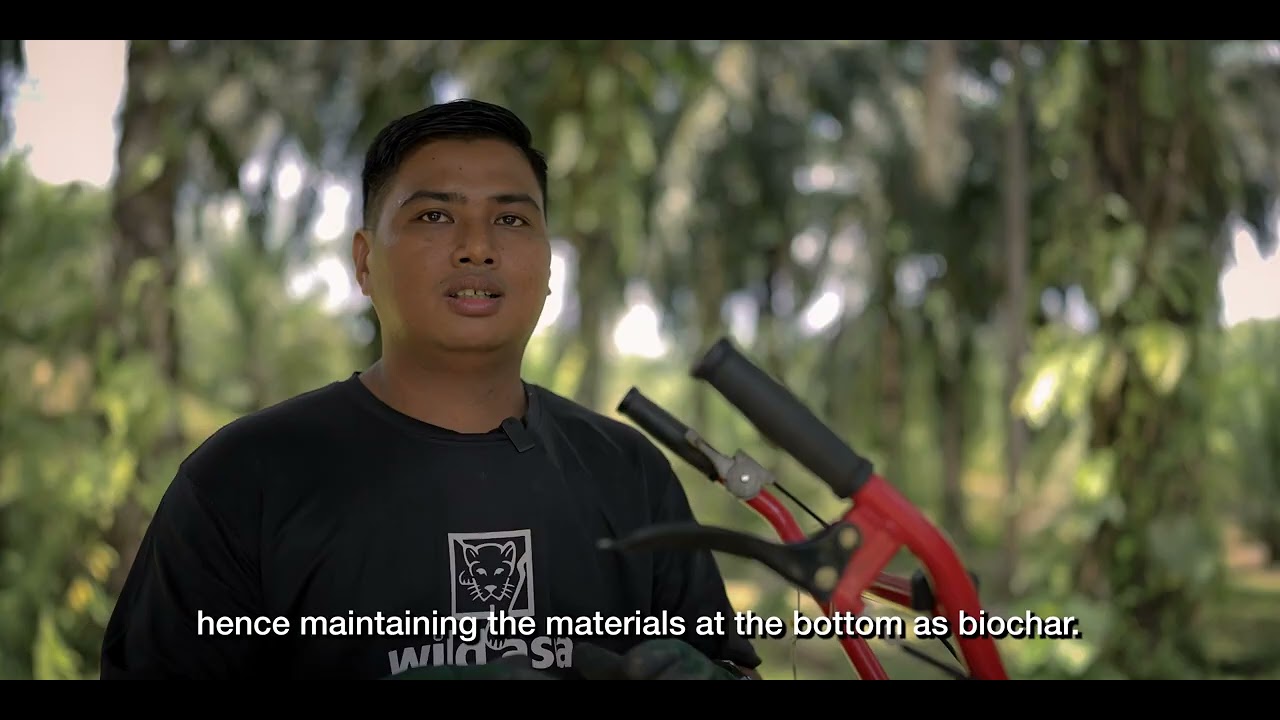
Plants naturally capture carbon as they grow. Normally, that carbon is quickly lost when residues decompose or burn. WAGS BIO closes this loop. With farmer-friendly kilns, residues are turned into biochar — a stable form of carbon that locks CO₂ into soils for centuries.
Make: Safe, low-tech kilns; residue-to-biochar workflow
Use: Mix with compost, apply around palms, or in planting holes
Why it matters: Improves soils, reduces costs, and creates a verifiable climate asset
Verification: Carbon Standard International Artisan C-Sink


Community BIO Hubs
WAGS BIO began with one-to-one farmer training. To scale, we developed BIO Hubs or Centralised BIO Transformation Units (CBTUs) — scalable “hubs” that turn organic residues into BIO products while spreading knowledge through networks. BIO Hubs are living labs where people can visit, learn, and see results first-hand.
Each BIO Hub acts as:
A local production site for BIO inputs
A training and knowledge-sharing centre
A demonstration farm to show results in practice & introduce new solutions
A local hub for boosting the local economy
By anchoring innovation locally, BIO Hubs give farmers the confidence to scale regenerative practices and spread change across the region. You can be part of the solution by supporting biochar carbon removals - as a company or as an individual.
Get in touch with us to learn how.
Results & Proof — Does it Work?


Our Progress
4
BIO Hubs active
in Malaysia (Perak, Sabah, Johor)
and Thailand (Chumpon)
>300
Farmers Trained
Awareness and Skills
>250 ha
Hectares
under regenerative practices
